
Connecting Cecemínsko: a story of roads and cooperation
Published: Dec 15, 2025 Reading time: 9 minutes Share: Share an articleUnder Cecemín, local municipalities are cooperating to modify the landscape, which is currently threatened by drought and erosion. Our LIFE WILL project team is there to help them. Come and read how their cooperation developed from wastewater treatment protecting their landscape.
A voluntary association between municipalities in Cecemínsko was established twelve years to construct a joint pressure sewer system and wastewater treatment plant. The original villages of Dřísy, Konětopy, Ovčáry, and Sudovo Hlavno, were joined by Lhota, Hlavenec, and Kostelní Hlavno. Their collaboration proved so successful that it gradually expanded to include broader municipal functions. Today, these municipalities cooperate in the areas of culture and social events..
As part of their efforts, the municipalities also joined our LIFE WILL – Water in the Landscape and Soil project. Our team and collaborating experts are helping municipalities plan adaptation measures for landscapes threatened by drought and erosion.
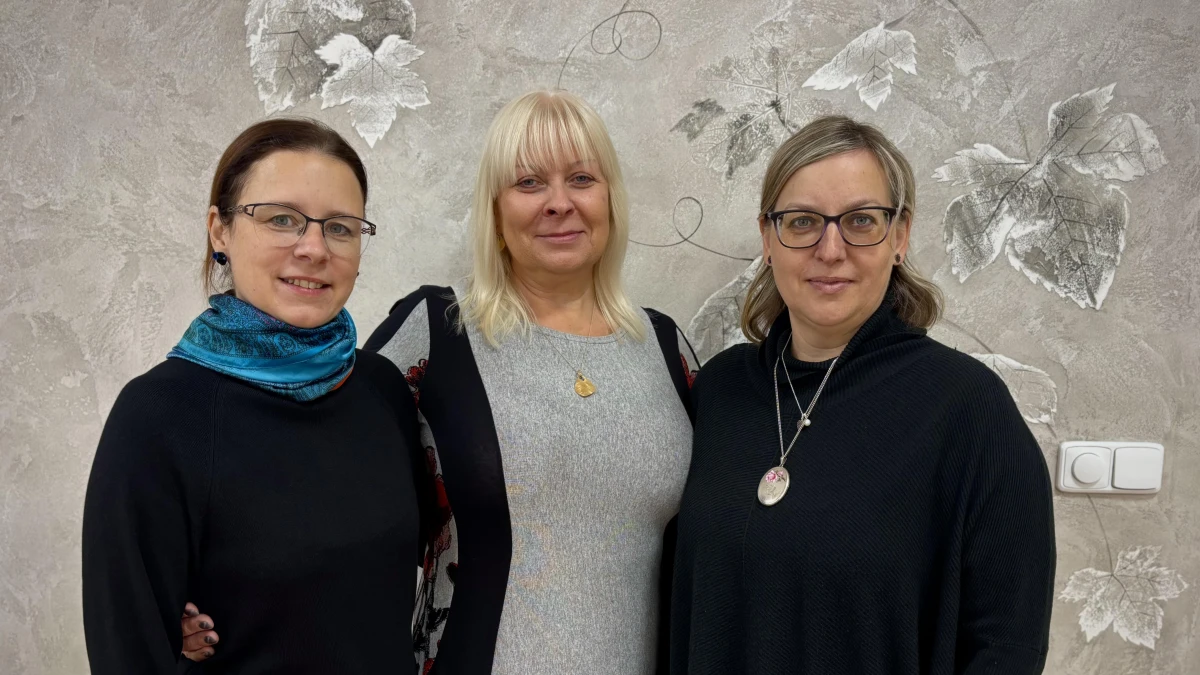
One theory that may explain the success of Cecemínsko is the central role of women in leadership of the municipalities. Most of these municipalities are headed by female mayors. Before the November meeting of our team, farmers, and municipal representatives, I spoke with three of them—Radka Kratochvílová from Lhota, Ivana Frajová from Dřísy, and Lenka Houdková from Sudovo Hlavno (from left to right in the photo), to better understand what lies behind the prosperity of this micro-region.
From pipes to dragon boats
First, it is necessary to explain why it was necessary to join forces for the WWTP. "We needed to solve the sewerage problem," explains Ivana Frajová, the initiator of the cooperation. "There was a period when subsidies were only given to associations or agglomerations. Unfortunately, before we had a project, this was cancelled and it was difficult to obtain the subsidy." The municipalities finally obtained a subsidy on their third attempt and continued to cooperate.
Another joint project involved composters for households and the purchase of a communal wood chipper. Additionally, some of the municipalities bought containers for bulky waste and metals.
And as we already know, it didn't end there. According to Lenka Houdková, environmental cooperation naturally led into the field of community activities and culture. Today, the municipalities co-organise sporting and social events, such as dragon boat races and children's days.
"Perhaps you could say that what brought us together at the beginning was the technical infrastructure, the pipelines, but then it was beautifully connected by humanity and common interests," adds Lenka Houdková, describing the origins of the broader cooperation.
For the municipalities involved, the cooperation also means mutual assistance. "When it comes to legislation, we all deal with the same issues in our municipalities. For me, these meetings are important because we can share information about documents—what we need to issue and create, and keep track of various deadlines," adds Radka Kratochvílová.
On the topic of female-led cooperation as a cause for local success, Lenka Houdková, notes that women are used to working and cooperating, while men more often want to compete and rival each other.
"I see this in other municipalities too, that women tend to be more cooperative. Although not always," adds Ivana Frajová with a smile.

Stepping into the countryside
According to the mayors, their priorities are making the countryside accessible and connecting people to it, along with related activities within the LIFE WILL project. Today, each municipality works separately within its own area, but in the future, they will work together.
Lenka Houdková adds: "We all go on trips to distant places and visit castles and palaces. But the landscape of the Polabí region and around Cecemín is beautiful. And if you give people the opportunity to connect it both on maps and through joint gatherings, then they may discover that what we have here is perhaps the most beautiful thing of all."
The dominant feature of the micro-region, Cecemínsko, is logically the centre of the meeting. Under the leadership of the former local government, recultivation took place here, and for the last two years, all citizens of the municipalities have been meeting here.

Water in the soil, soil for harvesting—carefully seeking balance
The LIFE WILL project focuses primarily on finding and implementing measures that will help retain water in the agricultural landscape. The land around Cecemín is fertile, but due to certain agricultural practices, it is losing its fertility. Along with a loss of fertility comes a loss of ability to withstand climate change. That is why the local communities have decided to address this issue.
According to her, a major problem is that the soil, which has always been of very high quality, has recently been losing its ability to retain rainwater, which then flows into the villages along with mud. Ideally, as mayor, she would like to work with local farmers to bring about change, although she does not expect it to be a smooth process.
Ivana and Radka also have no doubt that change must take place in small, cautious steps. For example, thanks to comprehensive land reform, the municipality of Dřísy has enough municipal land for planting. However, for the time being, these plots are often ploughed and farmed, so Ivana Frajová faces a series of negotiations with the farmers concerned—these are unlikely to be easy. "We will need to get it back, and I don't think they will be entirely happy about that," she explains. "Right now, they have a field, and we will build a road or a hedge in the middle of it. We will need to communicate carefully—so that we don't upset them, and so we can come to an agreement with them."
The success of future negotiations with farmers may be indicated by the mayor's undeniably empathetic approach to the plight of the farmers. She understands the difficult situation in which many farms and agricultural cooperatives are struggling to survive because it is challenging to compete with cheap food.
Lenka Houdková adds: "A big bonus is that we work on beautiful, fertile land here. Hopefully, the farmers will understand that we don't want to restrict them, but we want to coexist here because we are responsible for the municipalities. They are trying to farm the land, and we hope we can work together so that it all fits together nicely. And so that the measures don't affect them too much, and at the same time help the landscape.”
According to Ivana Frajová, existing maps of wind and water erosion can be used to identify problematic land, can also help mutual understanding. If erosion can be prevented here, it will ultimately help the tenants.
Plans for the landscape and Cecemín
In November, we held a meeting with experts in Dřísy, where the current stages of cooperation in individual municipalities were discussed. The afternoon part of the programme was devoted to a meeting with farmers. A large number of them attended, which made the mayors genuinely happy. "My colleagues and I said that this was actually the first time they had the opportunity to meet in one place. It was clear that they were interested in the topics of the seminar, as they discussed them not only with the speakers but also among themselves," says Lenka Houdková.

Some of them even immediately expressed interest in planting trees on the land they farm. "We will gradually ask the seminar participants how they liked it, whether they plan to plant anything, or whether they are interested in holding similar meetings on a regular basis," plans Ivana Frajová.
Thanks to joint efforts of the villages, the Cecemínsko landscape is set to become greener. Tree-lined avenues, copses, and herbaceous strips will be added. There are also plans for a joint project called JÍT KRAJINOU (Walking Through the Landscape), which will connect villages with selected field paths, where benches, picnic sets, trash cans, shelters, information panels, signposts, and play and educational elements will be installed. And in Cecemín itself, a brand new bio-corridor will be created.
Ivana Frajová, Lenka Houdková, Radka Kratochvílová, Alena Šeligová (Konětopy), Jarmila Smotlachová (Hlavenec), Jitka Štyksová (Nedomice)—and other mayors of cooperating municipalities—have many plans and therefore a lot of work ahead of them. Fortunately, it is true that work goes better when done together.
LIFE WILL – Water in the Landscape and Soil addresses the issue of drought and the impacts of climate change on the landscape. It is co-financed by the LIFE Programme—a European Union financial instrument supporting projects that increase the biological diversity of the landscape or its resilience to climate change—and the Czech Ministry of the Environment. Its goal is to increase the resilience of the population and agricultural landscape to climate change through the introduction of nature-based adaptation measures at the local level. We are achieving this goal by increasing the involvement of local actors and the public and their ability to implement measures for water retention in soil and landscape. We cooperate with Beleco, the Association of Local Authorities of the Czech Republic, and Daphne – Institute of Applied Ecology.


