
Brussels Showed Where Climate Policy Is Heading and What Others Have Learned from Floods
Published: Apr 30, 2026 Reading time: 3 minutes Share: Share an articleAt the end of March, the European Commission building in Brussels became a hub for discussions on European climate policy and the importance of collective action in tackling climate change. Thanks to EUKI ELCA, we were there as well.
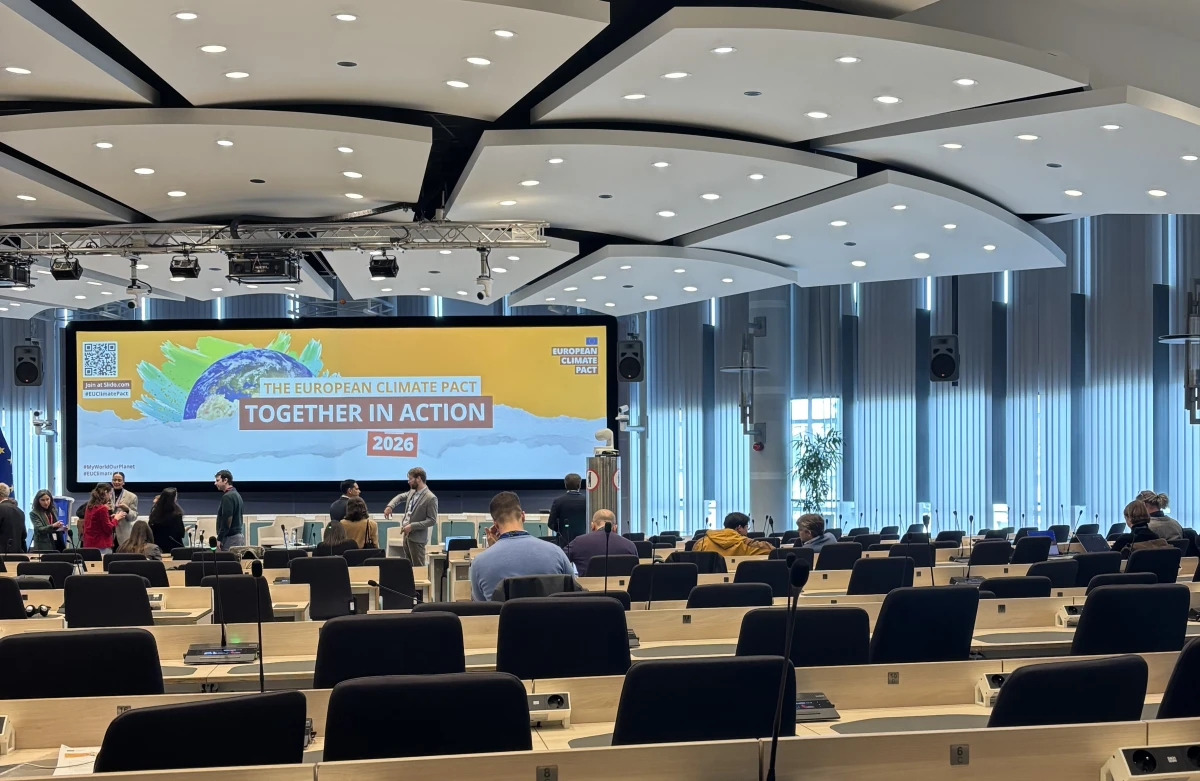
More than 800 participants from across Europe gathered at Together in Action 2026, organised by the European Climate Pact, to engage with policymakers and share their own experiences. Alongside inspiring examples from practice, less expected topics also emerged, such as the impact of artificial intelligence on public debate about climate change.
Experts, institutional representatives, community climate ambassadors, and grassroots initiatives from across Europe came together, mostly in person or online. The programme combined community workshops, panel discussions, lectures on European legislation, and interactive formats.
In total, more than 150 speakers from 25 countries took the stage. The main message was clear: climate action depends on connecting people, policies, and cooperation across levels. A strong emphasis was placed on the need to shift from risk management to building resilience. According to speakers, European climate policy must focus more on preparedness, adaptation, and the role of innovation and clean industry, not only for environmental goals, but also for economic security.
From Inspiration to Real Change
A large part of the programme focused on practical examples, from community energy projects and youth engagement to tackling disinformation. The issue of climate disinformation was particularly relevant for us. Discussions highlighted the importance of understanding who creates online content, why it is created, and how to identify greenwashing or manipulative messaging.
“AI is displacing traditional media and largely draws on content from social platforms such as Reddit. We need to examine the entire infrastructure of language models, not just their outputs, including what data they use, who creates it, and what mechanisms shape their functioning,” several speakers pointed out.
Another interesting topic was research on AI-generated images of biodiversity. It shows that AI tends to produce simplified and stereotypical representations of nature, which can influence how people perceive environmental issues.

Flood Experience as a Key Lesson
Adaptation to climate impacts, including extreme events such as floods, was another major theme. One of the most impactful sessions focused on experiences from Valencia, which was hit by devastating floods in October 2024, and on how regions and institutions can better prepare for such events.
“It was very important for me to hear concrete experiences from flash floods in Spain, which resulted in 6,558 damaged homes, 15,000 destroyed cars, and sadly 230 lives lost. The speakers reflected on what had not worked and why, for example, how meteorological warnings could have been ignored. It was a very insightful reflection. I compared their approach with the Czech one, as we are also working in flood-affected regions and can bring these lessons into practice,” says Roman Klecker, coordinator of climate resilience programmes at People in Need in South Moravia.
The event also confirmed that climate transformation is not only about policies or technologies, but above all about people. Connecting local initiatives with European policy is proving to be key to long-term change. As echoed throughout the programme: every step counts and together they form a functional whole.

Our three-day visit to Brussels showed us that climate policy today is not shaped only by laws and regulations, but also by how information is created and shared. Alongside technological solutions, the quality of public debate will play an increasingly important role.
And it is precisely in shaping this debate - through communities and media - that we contribute as part of the EUKI ELCA project.


